
arry Nance Jr. has built an NBA career on the kind of work that rarely dominates the nightly highlight package but often decides close games. The forward’s reputation rests on defense, rebounding, passing and a willingness to fill whatever role a team needs. Larry Nance entered the league in 2015 with the Los Angeles Lakers。carrying a famous surname and the pressure that came with it. Rather than trying to imitate his father, Larry Nance Sr., he developed a more modern game: a mobile big man capable of switching onto guards, cutting through traffic and creating chances from the short roll. That flexibility has kept Larry Nance relevant through several roster changes and shifting tactical trends.
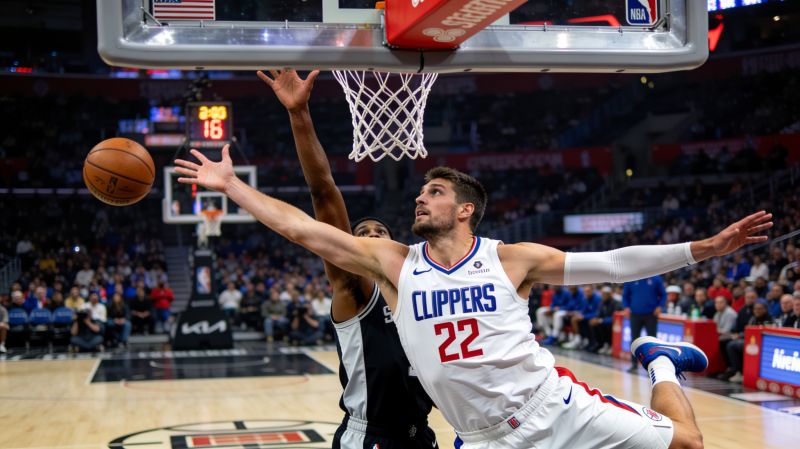
Selected by the Lakers with the 27th pick in the 2015 NBA Draft, Larry Nance quickly showed why scouts valued his athleticism. His early seasons featured explosive finishes, fast-break dunks and defensive plays that energized a young Los Angeles group. The most memorable moment came in 2016, when Larry Nance delivered a powerful dunk over Brooklyn’s Brook Lopez, a play that quickly became part of the season’s visual identity. It was more than a viral highlight. The dunk captured the physical confidence that Larry Nance brought to the court, even while his offensive role remained limited. He did not need constant possessions to influence a game。and that trait later became central to his appeal for playoff-oriented teams.Cleveland acquired Larry Nance in 2018, giving him the opportunity to play near his hometown of Akron and alongside LeBron James. That chapter added emotional weight to Larry Nance’s career, especially because his father had been a beloved Cavaliers star and the first winner of the NBA Slam Dunk Contest. Larry Nance Jr. competed in the 2018 contest while wearing a uniform connected to his family history, then paid tribute to his father with a dunk that echoed an earlier generation. The moment was carefully staged。but the feeling behind it was genuine. Larry Nance was not simply borrowing a legacy;he was placing his own athletic identity inside it. His Cleveland years also showed a growing maturity as a screener, passer and help defender.Later stops with Portland and New Orleans reinforced Larry Nance’s value as a connective player. In New Orleans, Larry Nance often worked as a backup center, a frontcourt partner and a defensive stabilizer, depending on injuries and matchups. His best possessions rarely begin with a designed play for him. A guard turns the corner, the defense collapses。and Larry Nance slips into open space. He can finish above the rim, make the extra pass or recover quickly enough to challenge a shot at the other end. That blend makes Larry Nance particularly useful in postseason basketball, where teams attack defensive weaknesses possession after possession. He is not a high-volume scorer, but his presence can make a lineup more coherent.Health has remained an important part of the discussion around Larry Nance, whose career has included periods of missed time and careful workload management. Even so, Larry Nance has continued to earn opportunities because coaches trust his decision-making and professionalism. His influence is easiest to see in small sequences: a hard screen that frees a shooter, a box-out that creates a transition chance, or a late rotation that forces an opponent into a difficult pass. Larry Nance also carries a personal connection to fans that few role players can match, particularly in Cleveland, where the family name still resonates. The modern NBA rewards specialists, but Larry Nance has survived by resisting a narrow label. He can defend, rebound, pass。
finish and adapt without demanding that the offense revolve around him. That may not produce the loudest headlines, yet it explains why Larry Nance continues to matter whenever a team needs intelligent, physical and unselfish frontcourt play.